Reducing Landfill Methane Emissions and Expansion of the Hierarchy of Waste Management
Authors: Nickolas J. Themelis
Affiliations: Earth Engineering Center, Columbia University, New York, NY, 10027, USA
Paper included in Proceedings of Global Waste Management Symposium, Rocky Mountains, CO, Sept. 7-1, 2008
Abstract
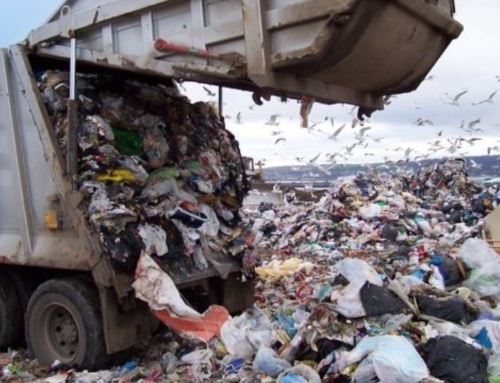
A 2007 study by the Goddard Institute of Space Studies of NASA and the Earth Engineering Center of Columbia University (1) projected the global generation of municipal solid wastes (MSW) in the period 2000-2030, using projections of population growth by the U.N. and per capita energy consumption by the International Energy Agency. On the basis of this and other information, global landfilling was estimated to nearly double between 2000 and 2030. Uncontrolled landfilling is a major anthropogenic source of methane, which is the second most important of the greenhouse gases affecting climate change. The only two options for decreasing the emissions of methane in landfill gas (LFG), corresponding presently to 850 million tons of carbon dioxide, are replacing landfilling by thermal treatment of MSW and, also, increasing LFG capture in the interim period.
The U.S. is the world’s largest landfiller with about 23% of the total MSW landfilled. However, it is also leading in the capture of landfill methane, estimated at about 60% of that captured in landfills globally. The world’s waste-to-energy (WTE) capacity is about 170 million tons and since 2000 increased at the rate of about 3.5 million tons per year. However, at this rate thermal treatment of MSW cannot catch up with the projected generation of post-recycling MSW. Therefore, it is necessary for governments to encourage WTE growth and also ensure that new and remaining landfills are constructed and operated so as to maximize the capture and utilization of methane in landfill gas. Such measures are already in place in some countries and include energy and carbon credits for LFG and energy recovered from solid wastes. Also, the hierarchy of waste management should be expanded so as to differentiate between modern landfills and the waste dumps that are still used widely in the developing world.
Keywords: methane, landfill gas, landfilling, global, waste-to-energy, WTE, thermal treatment, municipal solid wastes, MSW, hierarchy, sustainable waste management

Welcome to SOFOS: A Comprehensive Online Database
Managed by WtERT® and the Earth Engineering Center at Columbia University, SOFOS is a vast collection of research dedicated to the advancement of sustainable waste management that promotes knowledge sharing through numerous publications, dissertations, and studies.
Reinforce Your Knowledge by exploring our database. Enter your search inquiry below: