What to do with the Non-Recycled Plastics?
By Nickolas J. Themelis
Founder, Earth Engineering Center and the Global WTERT Council
September, 12, 2018
The invention of plastics resulted in the creation of a very useful family of materials for humanity. By now there are thousands of different plastic compounds which are used for clothing, food preservation and distribution, furniture and appliances, and hundreds of other beneficial uses.
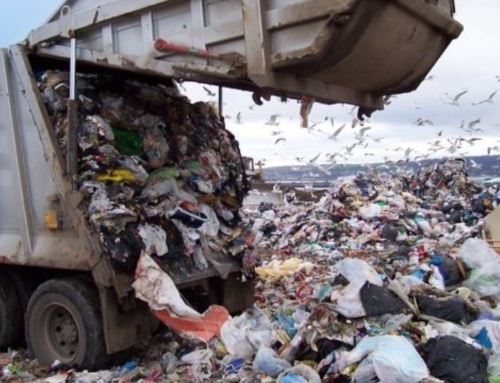
However, there is a persistent environmental problem with plastics: What to do with them at the end of useful life. In contrast to the principal metals used by humans, such as iron, copper and lead, the majority of plastic wastes cannot be recycled, for technical reasons. After enormous efforts by the plastics industry in many countries, less than 10% of the global plastic wastes are recycled as materials. In the U.S. another 10% is combusted with energy recovery in waste- to-energy power plants (Waste to Energy or WTE); the remainder 80% are landfilled. The amount of plastics that end in landfills or waste dumps is estimated at over 300 million tons per year.
Another major environmental problem: The plastic wastes that are not disposed in WTEs and sanitary landfills are a major pollutant to land and water. For example, an enormous “garbage patch” has been formed on the surface of the Pacific Ocean. A 600-meter long floating boom is now trying to collect some of the millions of tons of floating plastics but what will be done with them once they are brought to shore?
There is only one solution for the non-recycled plastic wastes: To use them as a source of energy. Prof. Themelis has suggested two possible ways of achieving this objective:
1) to use them as fuel in dedicated power plants (Plastics to Energy; PTE). The existing Waste to Energy (WTE) plants in the US have a cal orifice value of about 11 MJ/kg and the produce 0.55 MWh/tonne for the grid. A PTE plant (calorific value: 35 MJ/kg) should produce an estimated 2 MWh/tonne.
2) to use them as feedstock to pyrolysis plants that convert them into a synthetic oil (synoil). The synoil can go to existing petroleum refineries or be refined to diesel-like oil at the pyrolysis plant. Both technologies will ensure that the crude oil that Is now refined and used to make plastics will not be wasted by landfilling the used plastics. Also, both methods will be in accord with the concept of circular economy:
Outline of plan of action for plastics to energy venture:
Past research by the Global WTERT Council (WtERT) has shown that large scale implementation of the above technologies requires coordination of the following activities:
a) Large scale collection and physical preparation (sorting, shredding , bailing and transportation of mixed plastic wastes to energy or fuel recovery plants. Collection of some mixed plastics is already been done in several U.S. cities. Collection of all non- recycled municipal and industrial plastics can be implemented in a selected city in the U.S. or elsewhere.
b) The collected plastic residues will be transported to a Materials Recovery Facility (MRF) where they will be shredded, baled, and transported to either a PTE plant or a pyrolysis plant.
c) PTE plant: This will be based on the Circulating Fluid Bed technology. Some development will be required since MSW has a heating value of 6-11 MJ/kg, while mixed plastics have a heating value of 30-35 MJ.kg. This development work can be done by WtERT in collaboration with Prof. Huang of Zhejiang University. The prototype Plastics to Energy (PTE) plant is expected to have a capacity of over 300 tons/day (estimated net electricity production: 2MWh/ton plastics). An agreement will be made with a utilities company for purchase of the electricity.
d) Pyrolysis plant: Three technologies have been identified by GWC: The Pyrogreen and Pyrocrat processes in India and the GRE process in the U.S. One of them will be selected by the Company and a prototype industrial plant will be built by the Company, in India or some other country. The capacity of this plant will be decided by the Company but it is expected to be over 100 tons mixed plastics per day (300-400 barrels of syncrude per day). An agreement will be made with a petroleum refinery company to purchase the oil.