Project Description
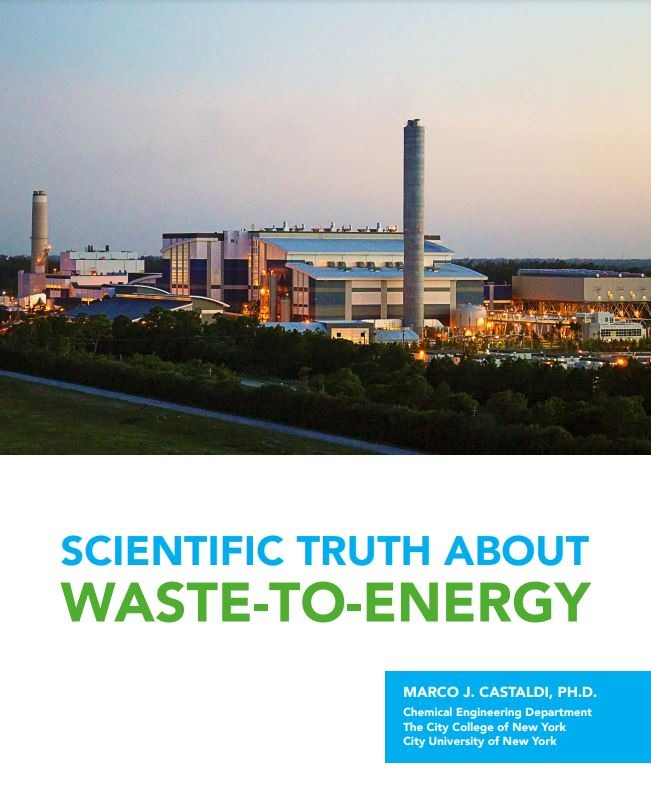
Recovery of Materials and Energy from Urban Wastes
The Scientific Truth about Waste-to-Energy
by Marco J. Castaldi,
The City College of New York | 2021
Description
Waste-to-Energy (WtE) represents a scientifically validated and essential component of modern integrated waste management systems. It enables the recovery of both energy and materials from non-recyclable municipal solid waste, transforming residual waste streams into valuable resources while significantly reducing reliance on landfills.
Extensive scientific literature, including the landmark report “The Scientific Truth about Waste-to-Energy” by The City College of New York, demonstrates that modern WtE technologies:
- Reduce waste volume by up to 90%, drastically minimizing landfill dependency
- Lower greenhouse gas emissions, particularly methane from landfills, making WtE a key climate mitigation solution
- Generate reliable renewable and low-carbon energy from residual waste streams
- Complement recycling systems, with evidence showing higher recycling rates in regions that deploy WtE
Modern facilities operate under stringent environmental standards and incorporate advanced emission control systems. Scientific evidence confirms that well-managed WtE plants have minimal impact on air quality and human health, with emissions often significantly below regulatory limits .
By recovering metals from bottom ash and producing electricity and heat, WtE contributes directly to the circular economy, ensuring that materials and energy are continuously reused rather than wasted.