ARTICLE I – PURPOSE AND SCOPE
The Global Waste-to-Energy Research and Technology Council (WtERT®) is an international academic network dedicated to advancing scientific knowledge and practical solutions for the sustainable management of waste.
WtERT promotes an integrated and science-based approach to waste valorization, encompassing processes that enable the recovery of energy, materials, and value from waste streams that cannot be effectively reduced, reused, or recycled.
The Council recognizes the importance of upstream waste reduction, material circularity, and resource efficiency as part of comprehensive and sustainable waste management systems.
ARTICLE II – SCIENTIFIC MISSION
WtERT’s mission is to advance the science and practice of sustainable waste management through research, education, and international collaboration.
This includes the study and development of a broad spectrum of waste valorisation pathways, including but not limited to:
- Pre-treatment, sorting, and material recovery processes
- Biological treatment such as anaerobic digestion and composting
- Thermochemical conversion including gasification and pyrolysis
- Thermal treatment with energy recovery
- Environmental performance, emissions control, and life-cycle assessment
- Integration of waste management systems within circular economy frameworks
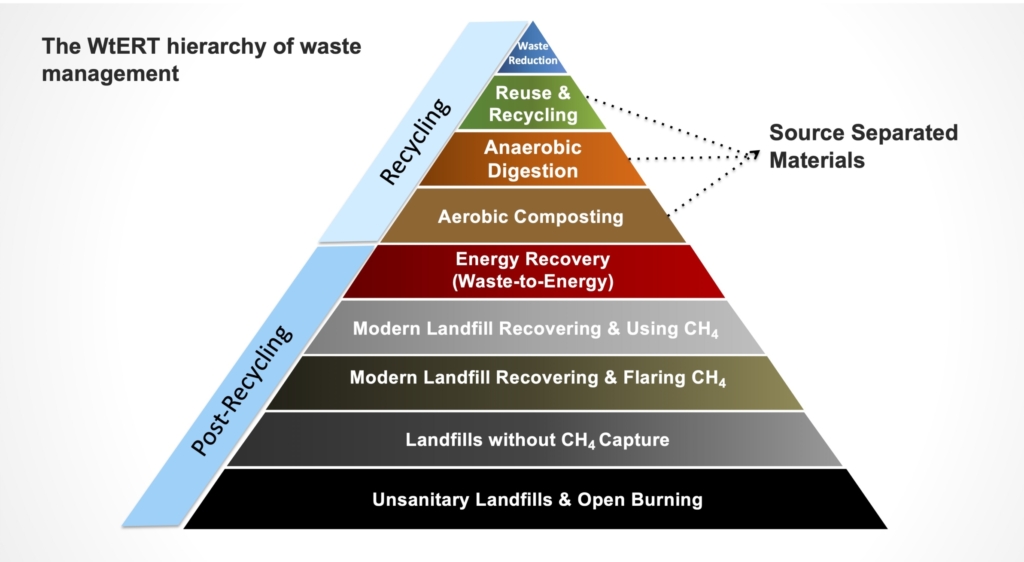 Figure 1: The WtERT hierarchy of waste management
WtERT supports a science-based, data-driven approach to evaluating these technologies and does not promote any single solution in isolation.
The Council maintains a neutral, academic position and does not serve commercial or political interests.
ARTICLE III – ACADEMIC FOUNDATION
WtERT was initiated with the support of the Earth Engineering Center (EEC) of Columbia University and continues to collaborate with leading academic institutions worldwide.
Zhejiang University, through its College of Energy Engineering, serves as a key academic partner supporting WtERT’s scientific development, research activities, and international academic exchange.
WtERT remains fundamentally anchored in academic institutions to ensure scientific integrity, independence, and credibility.
ARTICLE IV – GLOBAL STRUCTURE
WtERT operates as a global network of academic Partner institutions, primarily composed of universities and academic research institutions and Non-Profit organizations or professional associations.
These institutions contribute to the advancement of the Council’s mission within their respective geographic and institutional contexts.
WtERT provides a platform for coordination, collaboration, and knowledge exchange across this global academic network.
ARTICLE V – PRINCIPLES
Network Partner institutions:
- Participate through formal agreements with WtERT
- Share a commitment to scientific research, education, and knowledge dissemination
- Contribute to the development and visibility of WtERT activities in their respective regions
- Operate independently within their own institutional frameworks
Each Affiliated institution shall designate an official representative (the “Focal Point”) at the time of signing the Memorandum of Understanding (MoU).
The Focal Point:
- Serves as the primary liaison between the Institution and WtERT
- Acts as a coordination liaison within the WtERT network (non-representative role)
- Participates in WtERT coordination and working group activities in a non-governing capacity
WtERT maintains its academic character by prioritizing participation from universities and research institutions.
In exceptional cases, non-academic organizations may participate as external collaborators where their involvement supports the scientific and educational mission of the Council and remains consistent with its non-commercial and academic nature.
Membership or Partnership with WtERT does not confer voting rights, governance authority, or legal representation of the organization under any circumstances.
ARTICLE VI – ROLE AND STRUCTURE OF WtERT COUNTRY DESIGNATIONS
WtERT operates as a global network of academic Partner institutions and collaborative partners, without membership or voting-based governance structures
WtERT’s global presence is expressed through national or regional designations using the format “WtERT + Country” (e.g., WtERT Morocco).
These designations:
- Reflect the presence of WtERT within a given country or region
- Are not independent legal entities
- Do not constitute separate organizations, associations, or governing bodies
The establishment of a “WtERT+Country” designation follows the formal admission of one or more Partner Institutions through a Memorandum of Understanding (MoU) with WtERT.
No institution or individual may independently create, register, or represent a “WtERT+Country” entity without formal authorization from WtERT.
Each WtERT country designation is hosted within the premises of its Institutional Member(s), typically within a university campus, which serves as the academic anchor for local activities and network development.
Leadership of WtERT Country Designations
- Where a single Partner institution is present in a country, its designated Focal Point may serve as the designated academic coordinator of the WtERT country.
- Where multiple Partner institutions are present, their respective Focal Points may jointly serve as Coordinators to support the development of a collaborative national network.
These roles:
- Are functional and representative in nature
- Do not constitute governance, decision-making authority, or legal representation of WTERT.
Role of WtERT Country Designations
WtERT country designations are expected to:
- Promote research, education, and academic collaboration
- Facilitate the development of local academic and professional networks
- Maintain an active and visible institutional presence
- Engage with local stakeholders in a science-based and educational capacity
- Contribute to the global exchange of knowledge and best practices
This structure ensures that WtERT’s global network remains academically anchored, internationally coordinated, and scientifically driven.
ARTICLE VII – IDENTITY AND COHERENCE
The WtERT name represents a global scientific initiative built on academic excellence, collaboration, and integrity.
All Institutional Members and WtERT country designations are expected to uphold the scientific credibility, neutrality, and mission of the Council in their activities and communications.
ARTICLE VIII – ORGANIZATIONAL LEADERSHIP AND STEWARDSHIP
WtERT is guided by its leadership, which ensures the coherence of its mission, the integrity of its scientific work, and the coordination of its global activities.
The organization is supported by its officers, who are responsible for maintaining continuity, and strategic direction.
WtERT further benefits from the academic stewardship of Zhejiang University, through its College of Energy Engineering, which contributes to:
- Ensuring that the Council remains science-led
- Strengthening international academic collaboration
- Upholding standards of scientific credibility, integrity, and excellence
Detailed governance, roles, and operational procedures are defined separately in WtERT’s governing documents.
ARTICLE IX – EVOLUTION OF THE CHARTER
This Charter reflects the shared vision, structure, and scientific mission of the WtERT global network.
It may be updated over time to support the continued development of the Council and to reflect advancements in science, technology, and international collaboration.